Why Fungi Are Essential for Woodland Health
Push your fingers into the leaf litter of an old oak wood and you may feel something you did not expect: a fine pale webbing laced through the soil, sometimes white, sometimes yellow, sometimes the colour of milky coffee. That webbing is the visible edge of a network with more influence over how the wood works than almost anything happening above ground.
Fungi are neither plants nor animals. They digest their food outside their bodies, absorb it, and grow as threads rather than stems and leaves. In a woodland they act as plumbing, compost heap and long-term tenant all at once — feeding trees, recycling deadwood, and hollowing out trunks that later become bat roosts and owl nests. Once you start noticing them, a familiar walk never quite looks the same.
The partnership beneath your boots
Most trees in a British woodland do not forage alone. Their roots are joined with fungi in a relationship called mycorrhiza, which simply means "fungus root". The fungus extends the tree's reach into the soil; the tree pays for the service in sugar. There are two main arrangements, and they behave quite differently.
Ectomycorrhizal fungi
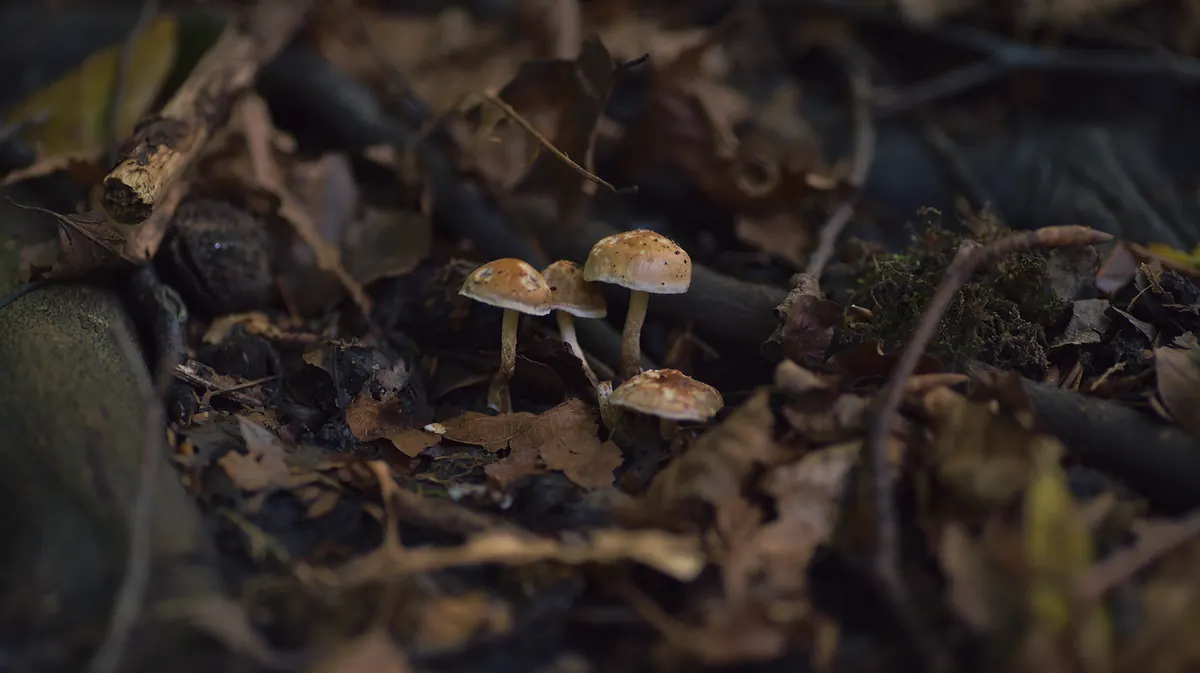
These are the ones behind the classic autumn toadstools. Their threads wrap around the tips of a tree's finest roots, forming a sheath, and push between the root cells. Oak, beech, birch, hazel, willow, pine and spruce all rely on them. The mushroom you spot is only the fruiting body — the equivalent of an apple on a tree that is otherwise hidden underground. A single large oak may be working with dozens of fungal species at once, and the mix changes with soil, age and drainage.
Arbuscular mycorrhizal fungi
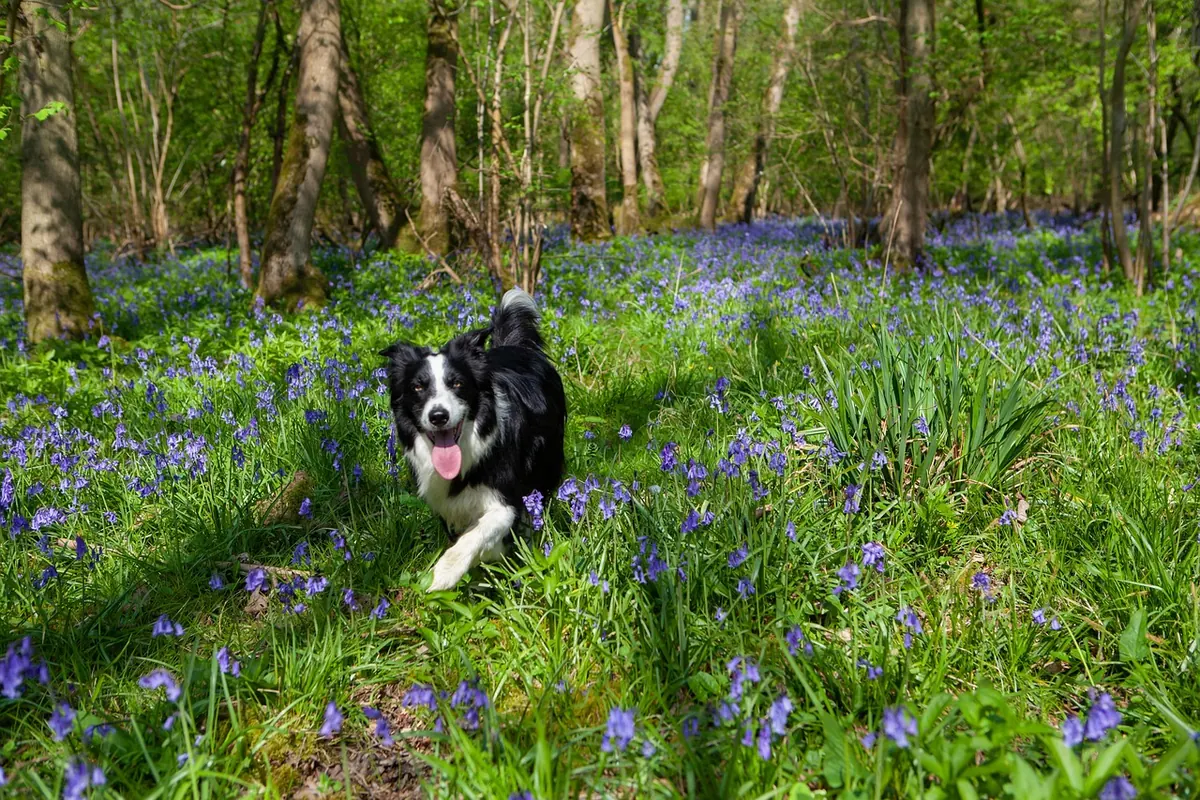
Less showy and easy to overlook. These thread inside the root cells themselves, branching into tiny tree-shaped structures. Ash, sycamore and field maple team up with them, as do most woodland flowers and grasses, from bluebells to dog's mercury. You will never find them in a basket, because they do not produce mushrooms worth noticing, but they are just as busy.
What the trees get in return
Fungal threads are far finer than roots and reach much further, which matters in heavy clay or thin, stony upland soils. They draw water from pores too narrow for a root hair to enter, and they are especially good at gathering nutrients that move slowly through soil, such as phosphorus, along with nitrogen and various trace elements. The tree hands over sugars made in its leaves, and in some cases a substantial share of them.
There is also good evidence that carbon and nutrients can move between plants connected by the same fungal network. How much this matters at the scale of a whole wood is still being argued about, so treat the tidiest version of the "wood wide web" story with a raised eyebrow. The exchange is real. The sentimentality is often added on afterwards.
Decomposition: the other half of the job
When a branch comes down or a tree dies, a different set of fungi takes over. Saprotrophic species — the recyclers — release enzymes that break down cellulose and lignin, the tough stuff that gives wood its strength. Brown rot fungi strip out the cellulose and leave a crumbly brown residue. White rot fungi attack the lignin as well, leaving pale, spongy, stringy wood that feels lighter than it looks. Between them they return decades of stored nutrients to the soil, slowly enough that woodland plants can use them.
Deadwood is not waste. It is one of the richest habitats a British wood can offer:
- Larval stages of beetles, flies and moths, many of which depend on a particular tree species or a particular stage of decay.
- Hollows and soft pockets in standing trees, later used by bats, owls, woodpeckers and nesting birds.
- Shelter for fungi, mosses, liverworts and invertebrates that need damp, stable conditions.
- Spongy, water-holding material that softens the effect of heavy rain and drought.
- A slow-release nutrient store, feeding the next generation of trees through the soil.
Why this matters in British woodlands
Britain has lost the great majority of its old woodland, and much of what survives is small and isolated. Fungi are poor travellers. A species that needs a specific tree and a continuous supply of decaying wood cannot hop between scattered woods the way a bird can. Soils that have never been ploughed or heavily drained hold fungal communities that took centuries to assemble, and they do not simply reappear when trees are replanted.
This is why a new plantation on an old woodland site is never a straight swap. Planting conifers on ancient broadleaved soil changes the leaf litter, the acidity and the fungal partners available to the trees around them. Even well-meant management can work against the underground half of the wood: stump grinding, deep cultivation, widespread removal of fallen timber and heavy machinery on wet ground all disturb the network that keeps the trees fed.
What puts the network under strain
Airborne nitrogen from farming, traffic and industry acts like a slow, unwanted fertiliser. It tends to favour vigorous grasses and nettles, and there is good reason to think it shifts the balance away from the specialist fungi of nutrient-poor woods. Compaction from machinery, mountain bikes and feet on soft ground squeezes the air spaces that fungal threads and roots both need. Fragmentation leaves populations too small to recover from a bad year. Shifting rainfall patterns make autumn fruiting less predictable, which matters because those fruiting bodies are how many species spread.
Helping fungi where you live
You do not need a laboratory or a woodland of your own. Most of what helps is about leaving things alone in the right places, and paying closer attention.
- Visit one wood through the year. Not just in October. Note which trees grow where, whether the ground is wet or dry, and what appears after rain. Patterns become obvious surprisingly quickly.
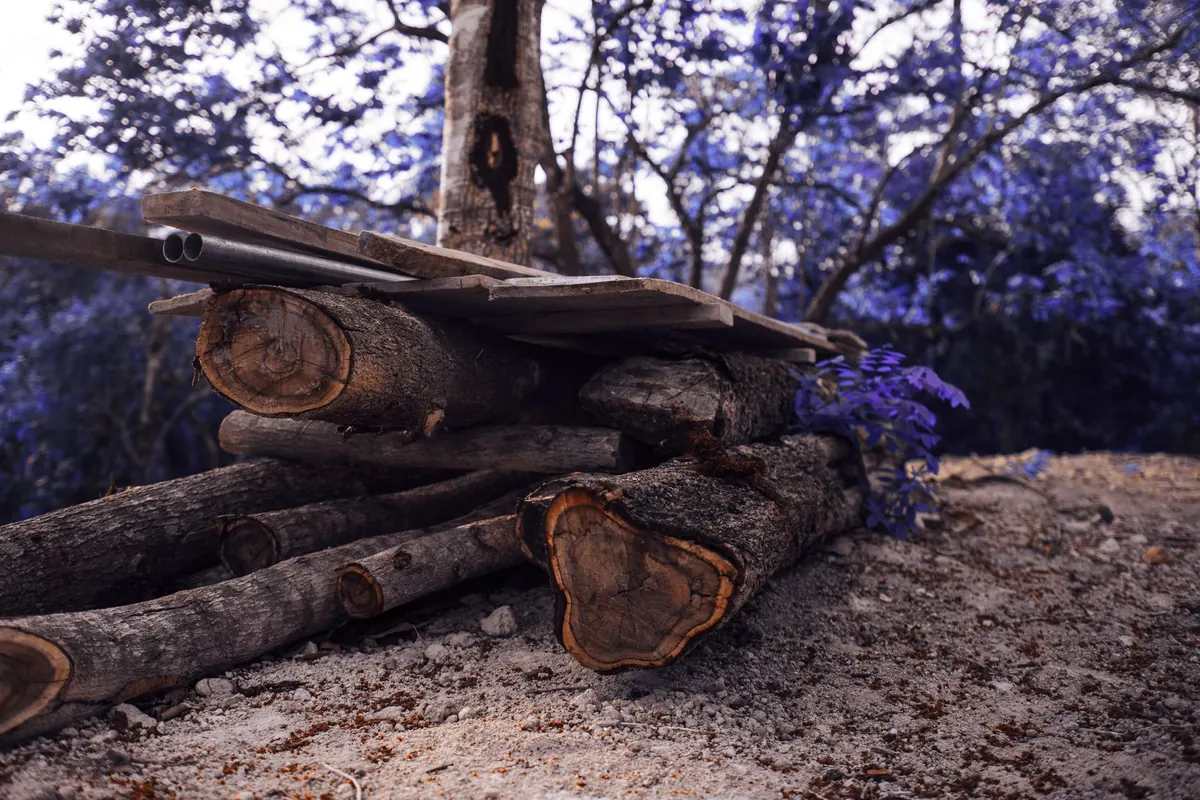
- Look at deadwood, not just toadstools. Bracket fungi on standing trunks, crusts and jelly-like growths under damp logs, and fine white threads under loose bark are all part of the story.
- Record what you find. Photograph the cap, the underside, the stem base and the surrounding trees. Note the smell and the tree it grows beside. County fungus groups and recorders welcome sightings, and records help shape how woods are managed.
- Leave the wood as you found it. Roll logs back, avoid raking leaf litter, and keep to paths where soils are thin and easily damaged. Check with the landowner or site staff before picking anything.
- Manage your own patch gently. Keep a log pile in a shady corner. Leave old, safely standing trees alone. Do not dig or rotavate under trees, and keep fertiliser well away from their roots.
None of this is dramatic, which is rather the point. The most useful thing most of us can do for woodland fungi is to leave a bit more mess, disturb a little less soil, and learn to recognise what is already there. The wood has been running on that arrangement for a very long time.
Photo: Delyth Williams / Pexels

Getting Started with Birdwatching in Woodlands
A practical beginner's guide to woodland birdwatching: the kit worth carrying, the best times to go, and...
A Year in the Woodland: Monthly Nature Checklist
A month-by-month guide to UK woodlands, from January catkins and April bluebells to autumn fungi and the...