Five Common Mistakes When Creating a Wildlife Pond
Five Common Mistakes When Creating a Wildlife Pond
A pond is the single most useful thing you can add to a garden. Within a season it will hold more species than the rest of the plot put together. It is also unforgiving: get a few early decisions wrong and you end up with green soup, a few bedraggled plants and the occasional drowned frog. Most of those failures come down to a handful of common mistakes. None of them are difficult to avoid, but each one can set a new pond back by months or even years. The good news is that wildlife is patient. Get the basics right and your pond will be colonised faster than you might expect.
1. Siting the pond badly
The first mistake is often made before a spade touches the ground. A wildlife pond needs light, but not relentless sun all day. It needs shelter, but not deep shade. It needs to be away from trees, but close enough to be seen and enjoyed. Put it under a sycamore, willow or poplar and you will spend every autumn fishing out leaves. As those leaves rot, they release nutrients that feed algae and turn the water green. Tree roots can also puncture a liner, and overhanging branches can drop debris all year round.
A low corner of the garden may seem convenient, but it can collect runoff from lawns, paths and neighbouring fields. That runoff carries fertiliser, pesticide and silt, all of which are bad news for a small pond. Aim for a spot that gets morning sun and some afternoon shade. Keep it away from large trees, and make sure water flows away from the pond rather than into it. If you want to watch wildlife from the house, put the pond within sight of a window, but not so close that every movement inside disturbs the birds and dragonflies outside.
2. Making the edges too steep and tidy
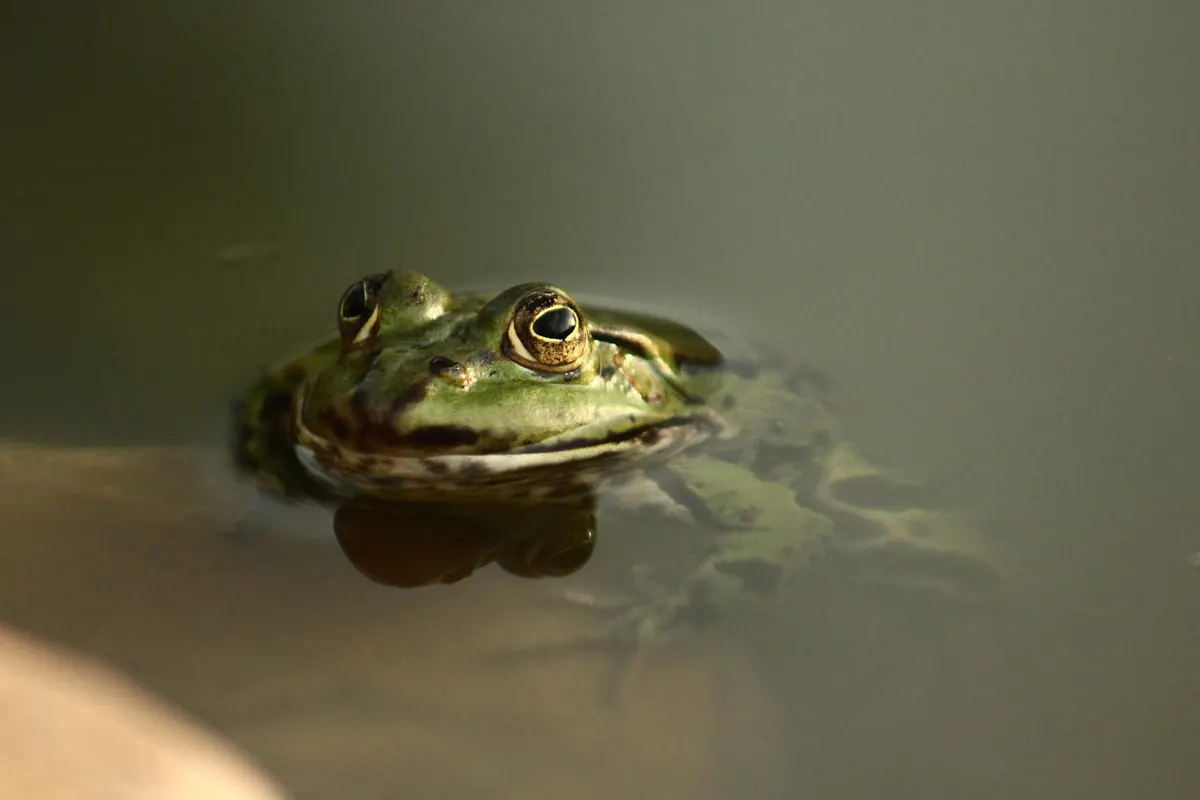
A wildlife pond is not a swimming pool. Vertical sides and a neat paved rim may look sharp, but they are a death trap for frogs, newts, hedgehogs and beetles. Amphibians need shallow water to spawn and easy exits when they leave. If the sides are steep and slippery, they can become trapped and drown. That is the drowned frog in the opening paragraph, and it is almost always preventable.
Leave one side as a gentle beach of pebbles or gravel. Add a log or a piece of stone that breaks the surface and slopes into the water. Let grass and marginal plants flop over the edge. These small ramps make the difference between a pond that wildlife uses and one that occasionally kills it. Tidy edges also remove the damp hiding places that young frogs and newts need when they first leave the water. A little mess around a pond is not laziness; it is habitat.
3. Using the wrong liner or trying to seal with concrete
A pond must hold water, but not every lining method is suitable. Cheap PVC liners can become brittle and puncture. Concrete is alkaline, prone to cracking, and difficult to repair once it fails. Preformed rigid ponds are easy to install, but many are too small and too steep-sided for a proper wildlife pond. They can also overheat in summer because there is so little volume to buffer temperature changes.
The most reliable choice is a butyl rubber or EPDM liner, laid over a protective underlay. It is flexible, long-lasting and safe for plants and animals. If you are using clay soil, you might seal with bentonite, but it is less predictable and can fail if the soil dries out. Whatever you use, avoid sharp stones and roots underneath. A puncture in the first year is a miserable job to fix once the pond is full and planted. Spend the extra money on a good liner and underlay; it is the one part of the pond you do not want to revisit.
4. Installing pumps, fountains and fish
This is the mistake that turns a wildlife pond into an ornamental pond. Pumps and filters are designed to keep water clear for fish, not to support wildlife. They suck in tadpoles, insect larvae and small newts. Fountains and waterfalls may look attractive, but they create unnatural movement and can make it harder for some species to settle. Fish, especially goldfish and koi, eat frogspawn, tadpoles and almost every invertebrate they can fit in their mouths. They also stir up sediment and add nutrients, which encourages algae.
If you want fish, build a separate pond. For wildlife, keep the water still and let plants do the cleaning. A small solar aerator can help in a heatwave if the pond is very small, but it is not essential. The murky, lively water of a wildlife pond is not a sign of failure; it is a sign of life. Expect to see insects, tadpoles and perhaps a curious newt rather than a perfect view of the bottom.
5. Getting the planting wrong
Plants are the engine of a healthy pond. They shade the water, use up nutrients, shelter tadpoles and provide places for dragonfly nymphs to climb out. The mistake is to plant too little, too late, or with the wrong species. A few pots of oxygenators and a single lily will not do. You need a mixture of submerged oxygenators, floating leaves, marginal plants and emergent plants.
Use native species where possible: hornwort, water starwort, water forget-me-not, marsh marigold, ragged robin, yellow flag iris and purple loosestrife. Avoid invasive non-natives such as parrot's feather, water hyacinth in mild climates, and New Zealand pygmyweed. Plant in low-nutrient aquatic compost, top with gravel to stop soil washing out, and avoid rich garden compost or fertiliser. Leave some open water for birds to bathe and dragonflies to hunt. And be patient: a new pond often looks bare for the first season, then fills in with alarming speed.
Before You Dig: A Simple Wildlife Pond Plan
If you want to avoid all five mistakes, work through this plan before you pick up a spade.
- Choose the site. Half a day of sun, away from trees, not in a low runoff spot, and within easy reach of a hose or water butt for initial filling.
- Mark out the shape. Use a rope or hose to create a curved, natural outline. Avoid perfect circles and rectangles.
- Dig in levels. Create a deep centre, a shallow shelf for marginal plants, and a very shallow beach on at least one side.
- Line and protect. Use underlay and a butyl or EPDM liner. Fold the edges neatly and hide them with turf, stones or gravel.
- Fill with rainwater. Rainwater is best. Tap water will not kill a pond, but it can contain chlorine and nutrients; let it stand or use a water butt if you can.
- Plant in layers. Add oxygenators, marginals and a few floating plants. Do not over-fertilise. Leave space for wildlife to move.
- Leave it alone. Do not add fish, pumps or chemicals. Let the pond settle and watch what arrives.
Rescuing a Pond That Has Gone Wrong
Even a pond built with good intentions can turn into green soup. The usual causes are too much sun, too many nutrients, no shade and no plants. If your pond is already struggling, do not reach for algaecides or a vacuum. Start by removing fallen leaves and debris, especially in autumn. Add more oxygenating plants and marginal plants to compete with algae for nutrients. Create shady areas with floating leaves or tall marginals. If you have fish, consider rehoming them. Never use chemicals; they will kill the very wildlife you are trying to attract.
A pond can recover surprisingly quickly once the nutrient balance shifts. You may need to remove blanketweed by hand for a season, but if you also plant densely and keep leaves out, the pond should clear. Do not empty and scrub it unless there is no alternative. A clean pond is a sterile pond, and the sludge at the bottom is home to a great many small creatures.
Wildlife Pond Maintenance Through the Year
- Spring: Watch for frogspawn and newt eggs. Remove blanketweed by hand if it smothers everything, but leave some for tadpoles to hide in. Top up with rainwater if needed.
- Summer: Keep an eye on water levels in hot spells. Leave long grass around the pond for amphibians to shelter in. Do not mow right to the edge.
- Autumn: Net out fallen leaves before they sink. This is the single best way to prevent green water next spring. Leave some seed heads and stems for overwintering insects.
- Winter: Avoid breaking ice with a hammer; the shock can harm frogs and other creatures. If you must clear ice, place a pan of hot water on the surface and let it melt through. Leave the pond mostly alone.
The Rewards of Getting It Right
A wildlife pond is not just a feature; it is a habitat. Get the basics right and you will see damselflies and dragonflies within weeks, frogs within a season, and newts once the plants have settled. Birds will come to bathe and drink. Bats will hunt insects over the water at dusk. Hedgehogs may visit the shallow edge. The pond will also change from year to year. One summer it may be full of tadpoles; the next it may be a nursery for dragonfly nymphs. That unpredictability is part of the pleasure.
Build it for the frogs, the insects and the plants, and the web of life will follow.
Photo: PiMeG / Pixabay
Getting Started with Birdwatching in Woodlands
A practical beginner's guide to woodland birdwatching: the kit worth carrying, the best times to go, and...
A Year in the Woodland: Monthly Nature Checklist
A month-by-month guide to UK woodlands, from January catkins and April bluebells to autumn fungi and the...