Spring Woodland Wildflowers: A Spotter's Guide
A wood can look thoroughly asleep in early March. Bare branches, wet leaf litter, a bit of green on the mossy side of a trunk and not much else. Then a warm spell arrives and the floor changes almost overnight: yellow stars in the mud, white drifts under the hazels, and a week later a blue haze running between the beeches.
Woodland wildflowers are in a hurry. They have a few short weeks to open, be pollinated, set seed and bank enough energy underground for next year, all before the canopy closes in May and steals the light. That deadline is what makes spring in a wood so concentrated, and why the same path can look completely different a fortnight apart.
Reading the wood floor
The order in which flowers appear is driven by light, soil and temperature. South-facing banks and low, sheltered ground warm up first; north-facing slopes, high woods and heavy clay soils run later. A wood in the south-west can easily be a fortnight ahead of one on a northern hillside at the same moment. So treat any calendar as a rough guide and let the wood tell you where it has got to.
Several of the plants below are described as ancient woodland indicators. They spread slowly by rhizome or bulb rather than by seed blowing in, so a mass of them usually means the wood has been continuously wooded for a very long time. That is worth noticing.
- Late February to mid-March: lesser celandine on damp edges, primrose on banks and verges.
- Mid to late March: wood anemone opening in the open patches, dog's mercury greening up beneath it.
- April: bluebells, ramsons and wood sorrel in earnest; lords-and-ladies showing its leaves.
- Late April to May: early purple orchid, with dog-violets still going in the dappled shade.
The early risers
Lesser celandine
Glossy, dark green heart-shaped leaves and small yellow stars that open wide in sunshine and shut the moment it clouds over. Look for it in damp patches, along ditch edges and in the muddy gateway of a wood. Older names for it include pilewort, and it does look like a plant that has been around for centuries in the same spot.
Wood anemone
White flowers with six petal-like sepals, often washed with pink underneath, held just above a ruff of deeply cut leaves. It grows in drifts because it spreads underground, which is why a good colony is a sign of old woodland. The flowers close at night and in rain, so a dull afternoon can make a whole patch vanish.
Primrose
Pale yellow, five-petalled, with crinkled leaves in a flat rosette and each flower on its own slender stalk rising from the middle. It prefers banks, woodland edges and hedge bottoms where there is light in spring and shade in summer. In the west of Britain it can be almost everywhere in April; in the east, look for it on lime-rich soils.
The April crowd
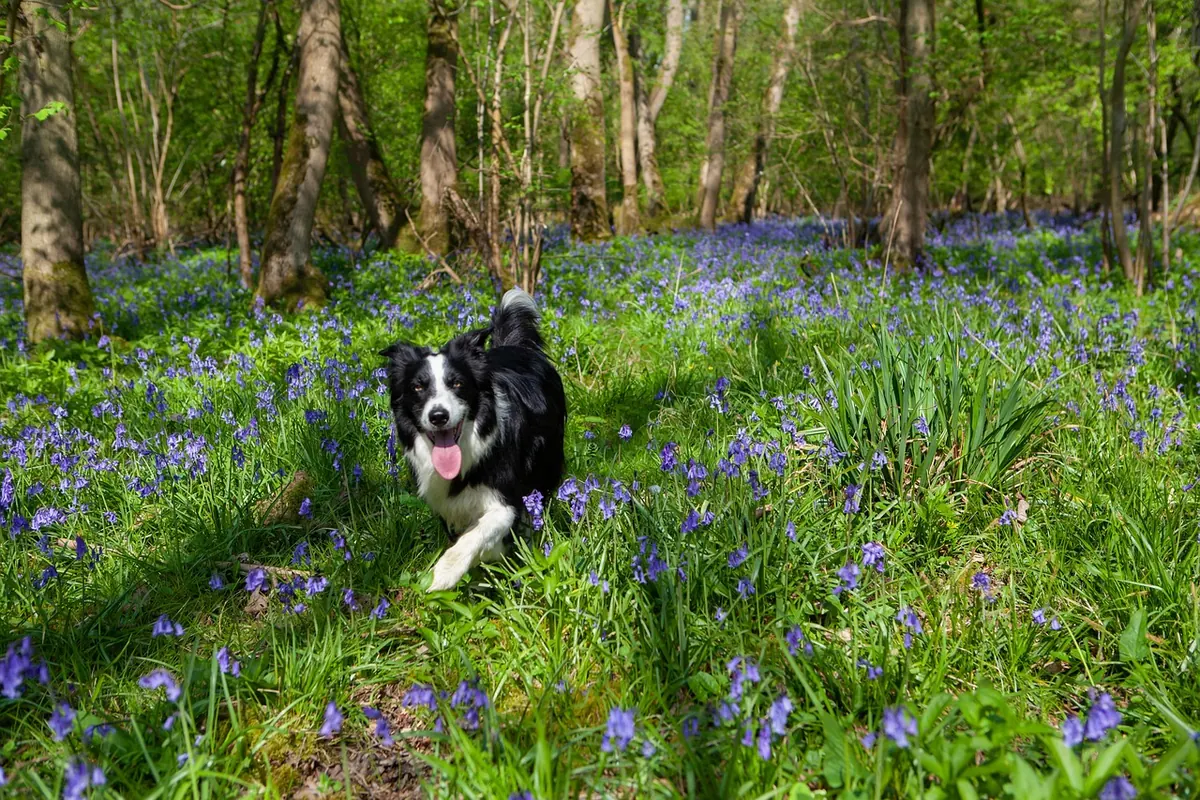
Bluebell
Native bluebells are deep violet-blue, drooping to one side of the stem, with narrow leaves and a sweet, slightly heavy scent. The flowers are mostly on one side of the spike and the anthers inside are creamy white. Spanish bluebells, common in gardens, stand upright, are paler, carry flowers all round the stem and have blue anthers. Where the two meet, hybrids turn up — the native is the one to treasure.
Ramsons, or wild garlic
You will usually smell it before you see it: broad, soft, lily-like leaves and clusters of white star flowers on a damp slope under old trees. The smell of garlic on a woodland path in April is one of the most reliable identification aids in the British countryside. Crush a leaf between finger and thumb if you are unsure, then wash your hands.
Wood sorrel
Three heart-shaped leaflets, like a small clover, with white flowers veined in pink. It folds its leaves down at night and in wet weather and grows in the deepest, oldest shade, often on mossy logs and tree stumps. A hand lens rewards you here: the veining on the petals is genuinely beautiful.
The quiet ones and the oddities
Dog's mercury
Not showy — a carpet of green with inconspicuous flowers — but it is one of the best clues that you are standing in ancient woodland. Male and female flowers grow on separate plants, and it spreads so vigorously by underground stems that it can smother other species. It is toxic, so leave it well alone.
Lords-and-ladies
Arrow-shaped leaves, often splashed with dark spots, appearing before the flower. The pale green hood with a purple spike inside turns into a spike of bright red berries by late summer. Every part of it is poisonous, so resist the urge to investigate too closely; the berries are best admired from standing height.
Early purple orchid
The first orchid of the year, with a spike of purple-pink flowers above leaves spotted like a trout's back. It favours old woods on limestone and chalk, and in a good year you will find it in groups rather than alone. Orchids are protected, so take a photograph and leave the plant undisturbed.
Common dog-violet
Small, blue-violet flowers with a paler spur at the back and no scent, unlike the sweet violet. Dog-violets are the ones you find scattered through woodland rides and hedge banks well into May, and they are a favourite nectar source for early bees and the brimstone butterfly.
Before you go
Three things will make a spring walk more useful. Go slowly, because most of these flowers are low and easy to walk past; look at the ground a few metres ahead rather than at the horizon. Go often, since a wood in mid-March and the same wood in mid-April share almost nothing. And note what you see, whether in a notebook or a recording app, with a location and a date.
- A hand lens for petal veins, spurs and anthers.
- A cloth or knee pad if you plan to kneel in wet leaf litter.
- A notebook or phone for dates and locations.
- Boots that keep your feet dry, because the best colonies are often on the boggy side.
Stay on the paths and keep off the flower beds. Uprooting a wild plant without the landowner's permission is an offence, and bluebells in particular rarely survive the move; picking a few flowers also removes the seed that keeps a colony going. Photographs, notes and a returned visit next year do far more good.
If you only manage one outing, aim for a still, bright morning in the second half of April in an old deciduous wood. Take a friend who walks slower than you do. They will spot the first wood anemone while you are still looking for the path.
Photo: Jelena Kazak / Pexels
Getting Started with Birdwatching in Woodlands
A practical beginner's guide to woodland birdwatching: the kit worth carrying, the best times to go, and...
A Year in the Woodland: Monthly Nature Checklist
A month-by-month guide to UK woodlands, from January catkins and April bluebells to autumn fungi and the...