Getting Started with Birdwatching in Woodlands
A wood at first light in spring is one of the loudest places in Britain. Before you see a single bird, you hear them: the fluting notes of a blackbird, the insistent two-note call of a great tit, the dry rattle of a wren from somewhere deep in the brambles. For a beginner, that wall of sound can feel like a closed door. It isn't. Woodland birdwatching is mostly a matter of slowing down, standing still, and learning a handful of names.
You do not need expensive gear or expert knowledge. You need binoculars that suit your hands, a rough idea of when to go, and the patience to stare at the same patch of ivy for five minutes. Everything else follows.
Why woodlands are a good place to start
Parks and gardens are easier: the birds are closer, tamer and often sitting in the open. Woodland teaches you more. The light is broken, the birds move through layers, and half of them will be heard rather than seen. That is the point.
Get into the habit of working the layers. Sweep your binoculars along the canopy, then the mid-storey branches, then the shrubs, then the leaf litter at your feet. Different birds feed at different heights, so a slow vertical scan is far more productive than staring at one spot and hoping.
Woods also build the skill that matters most: identifying birds by sound. A chiffchaff repeating its own name, a nuthatch's clear whistle, the chattering scold of a magpie — these tell you what is around long before your eyes catch up.
Kit that earns its place
Start with binoculars and a field guide. Resist buying anything else until you know what you are missing.
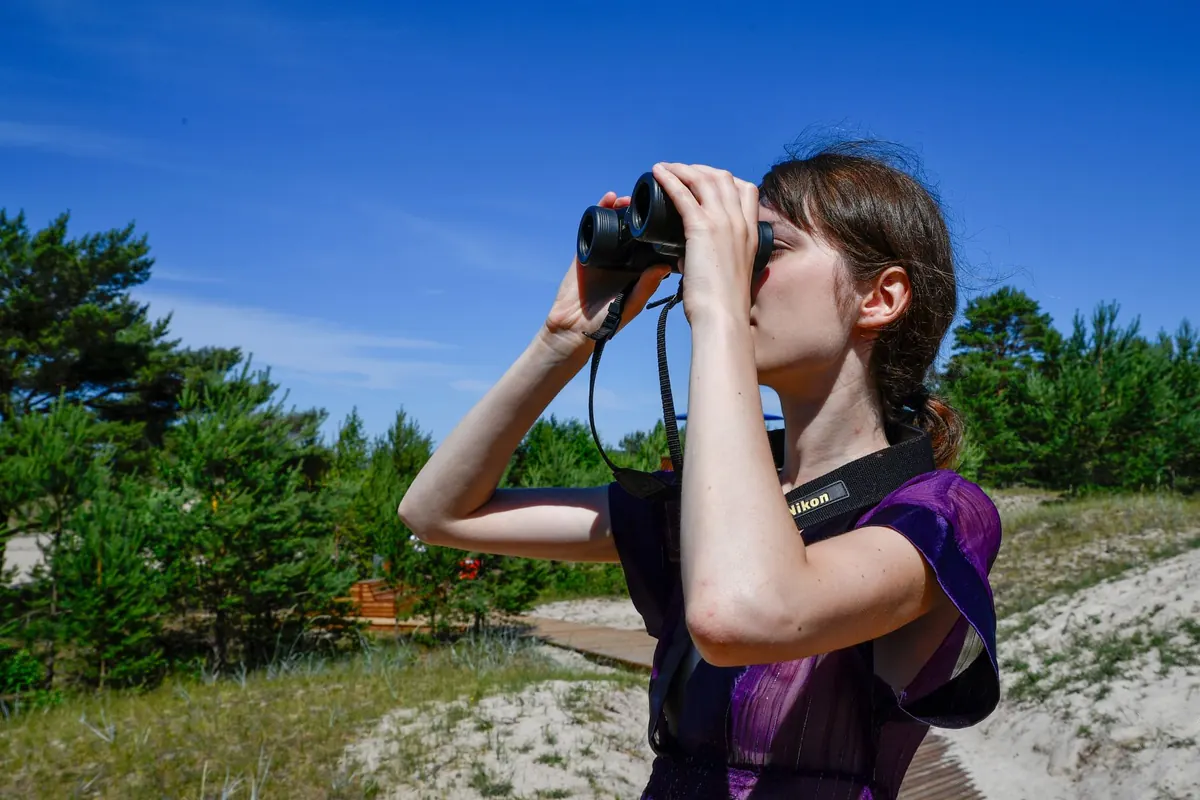
- Binoculars. Something like 8x42 or 8x32. The first number is magnification, the second is lens diameter in millimetres. An 8x pair is easier to hold steady and gives a wider view, which helps when a bird flits behind leaves. Higher magnification sounds appealing but shakes more and narrows your field of view.
- A field guide. A printed guide covering Britain and Europe is useful in dull light and never runs out of battery. Learn the layout before you go out, so you are not flicking through pages while the bird disappears.
- A notebook and pencil. Date, place, weather, species, behaviour. Pencil works in the rain. Your own notes will teach you more than any list.
- Clothing that keeps you still. Dull colours — greens, browns, greys. Quiet fabrics rather than crackly waterproofs if you can manage it, plus warm layers and boots you trust in mud. Cold hands end more trips than boredom does.
- Optional extras. A phone app for checking calls later is genuinely useful, provided it does not become the main event.
When to go
Timing is the one thing you fully control, and it changes everything.
Early mornings in spring
Birds sing hardest in the couple of hours after sunrise, and the dawn chorus in April and May is the best free concert in the country. In June, sunrise can be before five o'clock, which is a hard sell. If early starts are impossible, late afternoon in spring can still be productive. In winter, woodland birds feed all day to survive the cold, so the pressure to be out at dawn eases.
Weather and season
Calm, dry, mild days are best. Wind and heavy rain push birds into cover and muffle sound. A still morning after overnight rain is often excellent: the air is clear and birds are busy. Spring brings song and summer visitors. Autumn moves mixed flocks through the canopy. Winter, surprisingly, is the easiest season for beginners, because bare branches leave nowhere for a bird to hide.
Learning to look and listen
Pick one bird and stay with it rather than ticking off a dozen. Watch what it does: where it feeds, how it moves, whether it hangs upside down, whether it flicks its tail. Behaviour narrows an identification faster than plumage does.
Learn five calls properly instead of fifty vaguely. The great tit, blue tit, robin, wren and blackbird will cover most of what you hear in a British wood. Attach a phrase to each sound — mnemonics are not childish, they are effective. Then listen in your garden or local park, where you can see the bird making the noise. Linking sound to bird is the whole trick.
Woodland birds you will meet first
- Blue tit and great tit — acrobatic, common, often in the same tree. Blue tit is small and vivid; great tit is larger with a black head and white cheeks.
- Robin — sings almost all year, often low down and close, and will follow you along a path.
- Wren — tiny, brown, tail cocked upright, with a voice far too big for its body.
- Blackbird — turning over leaf litter, or giving a sharp "chink" of alarm.
- Chaffinch — pinkish breast and bold white wing bars, with a song that accelerates into a flourish.
- Nuthatch — blue-grey above and buff below, and the only common British bird that climbs down a trunk headfirst.
- Treecreeper — mouse-like, spiralling upwards around a trunk, then flying down to the base of the next tree.
- Great spotted woodpecker — black and white with red, and a drummer in early spring.
- Goldcrest — Britain's smallest bird, high in conifers, with a thin, high call you will hear more often than you see it.
- Jay — a loud, harsh screech, pinkish-brown plumage and a white rump in flight.
Woodland manners
Stay on paths where they exist, especially between March and July. Ground-nesting birds and young fledglings are easily disturbed, and wild birds, their nests and eggs are protected by law in the UK, so never move branches or vegetation to get a better view. Keep dogs close and under control. Avoid playing recorded calls to draw birds in, particularly in the breeding season, as it pulls them away from feeding young.
If you are heading somewhere remote alone, tell someone where you are going and when you expect to be back. Take water and a charged phone.
A simple plan for your first three visits
Choose one wood and return to it rather than touring new sites. Familiarity beats novelty when you are starting out.
- First visit. Walk the main path and try to identify nothing at all. Just note where the noise is coming from: the clearing, the stream, the stand of pines.
- Second visit. Go back to the loudest spot, stand still for ten minutes, and identify three species confidently.
- Third visit. Go earlier, or in different weather, and add one new species. Write it down.
Keep a scrappy list of what you see and where. Within a season you will notice patterns: the same wren in the same hedge, the first chiffchaff of the year, the day the winter thrushes arrive. That is the moment woodland birdwatching stops being a hobby you are trying and becomes somewhere you know. Binoculars on, boots on, alarm set — and give the wood ten minutes of complete stillness before you walk anywhere.
Photo: Margo Evardson / Pexels
A Year in the Woodland: Monthly Nature Checklist
A month-by-month guide to UK woodlands, from January catkins and April bluebells to autumn fungi and the...
Spring Woodland Wildflowers: A Spotter's Guide
Ten early woodland flowers to look for between February and May, with tips on where to find them, how to...