Beginner's Guide to Identifying British Trees by Bark
Winter is the honest season for tree-watching. The leaves are gone, the bones of a wood are visible, and the one feature still within arm's reach is bark. It is also the thing most beginners quietly ignore, partly because a bare trunk looks like so much grey noise, and partly because the field guides are organised around summer leaves.
Bark will not name a tree on its own, but it narrows the field quickly. Learn to read it and a familiar footpath in February becomes interesting again.
Learn the vocabulary first
Identification guides lean on the same handful of words, so it pays to know them before you set out. Texture at arm's length and pattern from a distance are often two different stories, so do both: run a hand over the trunk, then step back a metre and look again.
- Lenticels — small pores in the bark, often pale or dark dashes and diamonds. Birch and cherry are covered in them.
- Smooth — bark that has never cracked. Beech, hornbeam, hazel and young ash are the classic examples.
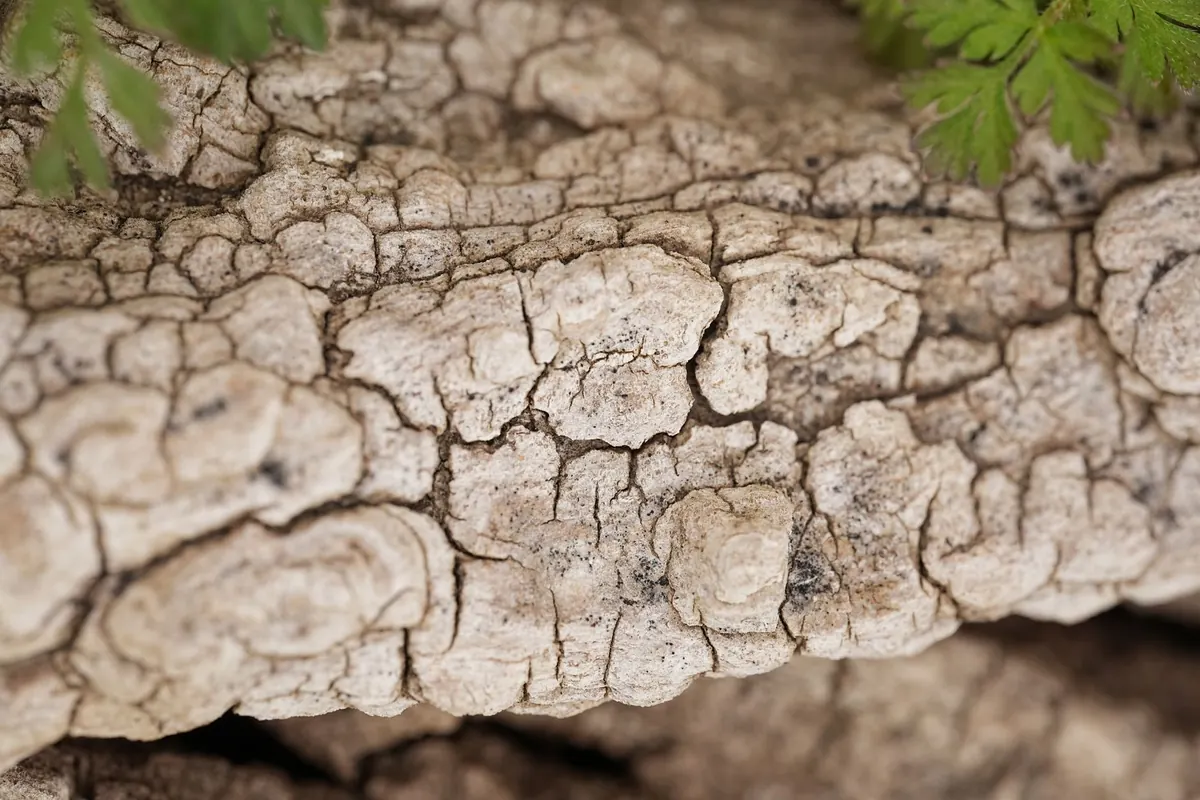
- Fissured or ridged — vertical cracks and ridges that deepen with age. Old oak, willow and elm.
- Plated or scaly — bark breaking into flakes and tiles, as on sycamore and horse chestnut.
- Peeling — thin curling strips, as on birch, wild cherry and older hazel.
- Burrs and bosses — knobbly swellings, common on veteran oaks, limes and willows.
The smooth, grey crowd
Beech is the beginner's friend: pale grey, faintly rippled, with darker patches that look like elephant skin. Crucially, it stays smooth even when it is a substantial tree. If a big broadleaf trunk in a wood has no cracks at all, beech should be your first guess.
Hornbeam is the lookalike. It is grey and smooth too, but the trunk is fluted, with sinewy ridges that twist up the stem like a rope of muscle. Beech tends to grow tall and clean; hornbeam often looks as though it has been working out.
Hazel is smoother still, olive-brown, and older stems peel away in thin papery flakes. It is usually multi-stemmed, the legacy of centuries of coppicing, and its yellow lambs' tail catkins give it away in January and February. Young ash is also smooth, but a grey-green rather than a warm grey — the ridges come later.
Bark with deep fissures
Oak is the archetype. Mature bark is grey-brown, broken into vertical plates and blocks, and deep enough on an old tree to take a fingertip. It also carries more than its share of moss, lichen and algae, so an ancient oak often looks less like a tree and more like a small habitat.
Sweet chestnut fissures too, but the ridges spiral around the trunk in a rope-like twist. Once you have seen it, you will not mistake it for oak again.
Ash is the opposite of its own youth. Mature ash has shallow ridges that meet and cross in a diamond or net pattern, and the bark stays pale rather than darkening much. Sadly, ash is now a tree to look at carefully: ash dieback shows as dark, diamond-shaped lesions around buds and branch junctions, with dead, thinning crowns above them. Note what you see, but do not move wood or leaves between sites.
Elm bark is deeply fissured, with ridges that cross and break rather than running cleanly down the trunk; wych elm often carries corky wings on young branches, a useful clue low down. Willow is furrowed and heavy, sometimes with burrs, and it usually stands near water. Sycamore breaks into grey-brown plates that lift and flake, frequently green with algae. Horse chestnut starts smooth, then develops scaly plates; its large horseshoe-shaped leaf scars on the twigs are more reliable than the bark itself. Field maple is smaller and neater, with fine vertical fissures and occasional ridges.
Colour, moss and small marks
Colour shifts with the weather. Alder looks distinctly purple-brown when wet and greyer when dry, and it is usually found with its feet near water or on damp ground. Scots pine is two-tone: orange-red, flaking jigsaw plates high on the trunk and grey, fissured bark lower down. That combination is visible from a distance across a heath.
Ignore the old rule that moss only grows on the north side of a tree. In Britain, mosses, lichens and algae respond far more to humidity, shade and the chemistry of the bark than to compass direction. What they will tell you is how sheltered and damp a spot is — and, over time, you will notice that certain species carry certain communities.
Confirm it with the rest of the tree
Bark narrows the options; something else usually settles it. Look up. Young beech and oak often hold on to dead leaves through winter, a habit called marcescence, while ash and sycamore let theirs go. Hazel and alder catkins hang in late winter. Buds are decisive: ash has sooty black buds, beech has long sharp ones, oak clusters its buds at the twig tips.
Then look down. Acorn cups, ash keys, sweet chestnut husks and sycamore seeds all point to the tree above. A single clue is a guess; three clues together are an identification.
A practical routine for the next few weeks
- Choose five trees you can reach on foot in ten minutes, and visit them at least twice.
- Start from twenty paces away and note the overall shape and colour before you touch anything.
- Lay a hand flat on the bark. Is it cold and smooth, dry and flaky, or rough enough to scrape?
- Find a young tree and an old one of the same species. Watching smooth bark become fissured is the single best lesson in this skill.
- Photograph the trunk with your hand in the frame, so you keep a record of scale.
- Write the name down only when two other features agree with your guess.
Two habits matter here. Do not peel bark from a living tree, and do not carve into it; fallen bark and litter tell you almost as much and cost nothing. Clean your boots and tools between woods, particularly where ash and larch grow, so you are not carrying spores from one site to another. And never taste or eat anything you cannot identify with complete certainty.
Bark is a slow record. It holds a tree's history in ridges, callus and scars — and unlike leaves, it is legible all year round.
Expect to get things wrong. Most people spend their first winter confidently naming sycamores as oaks. Then, somewhere around the third walk, you will catch sight of a trunk across a field, know it is a mature beech before you are close enough to see the buds, and the whole wood will start to feel like a place you know.
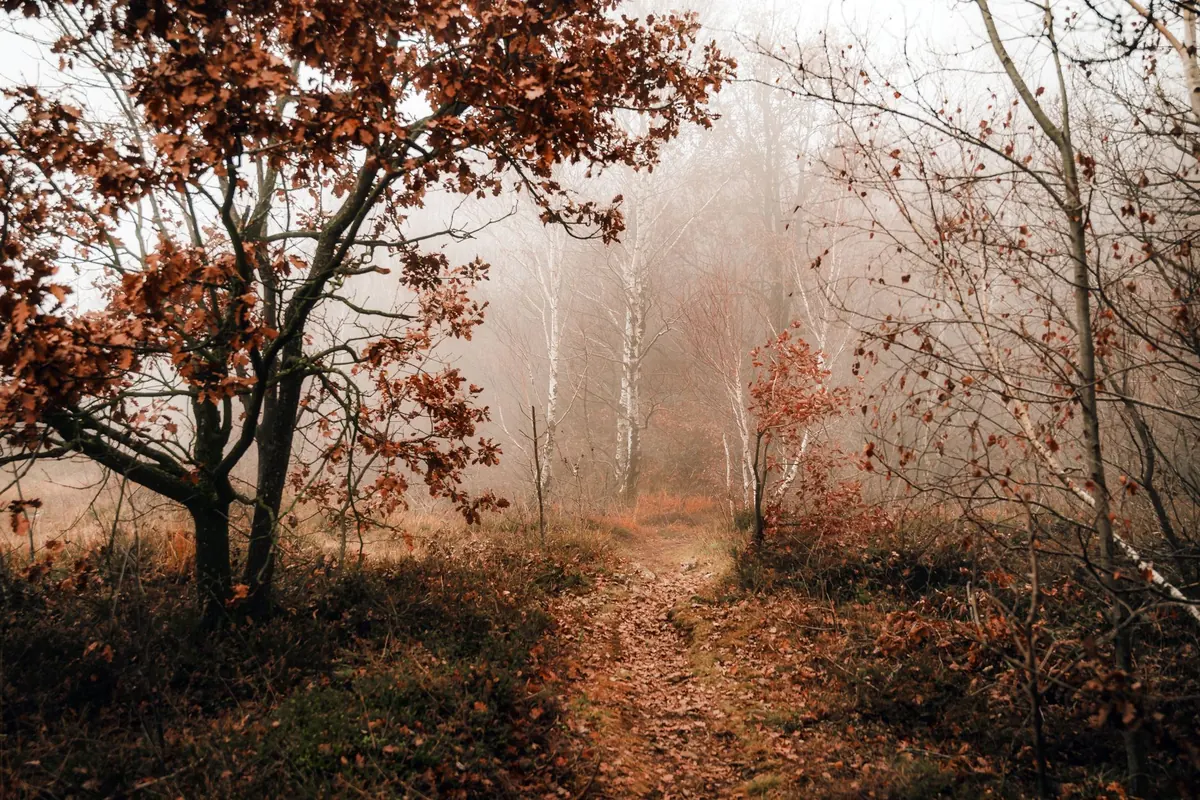
Photo: Eve R / Pexels

Getting Started with Birdwatching in Woodlands
A practical beginner's guide to woodland birdwatching: the kit worth carrying, the best times to go, and...
A Year in the Woodland: Monthly Nature Checklist
A month-by-month guide to UK woodlands, from January catkins and April bluebells to autumn fungi and the...